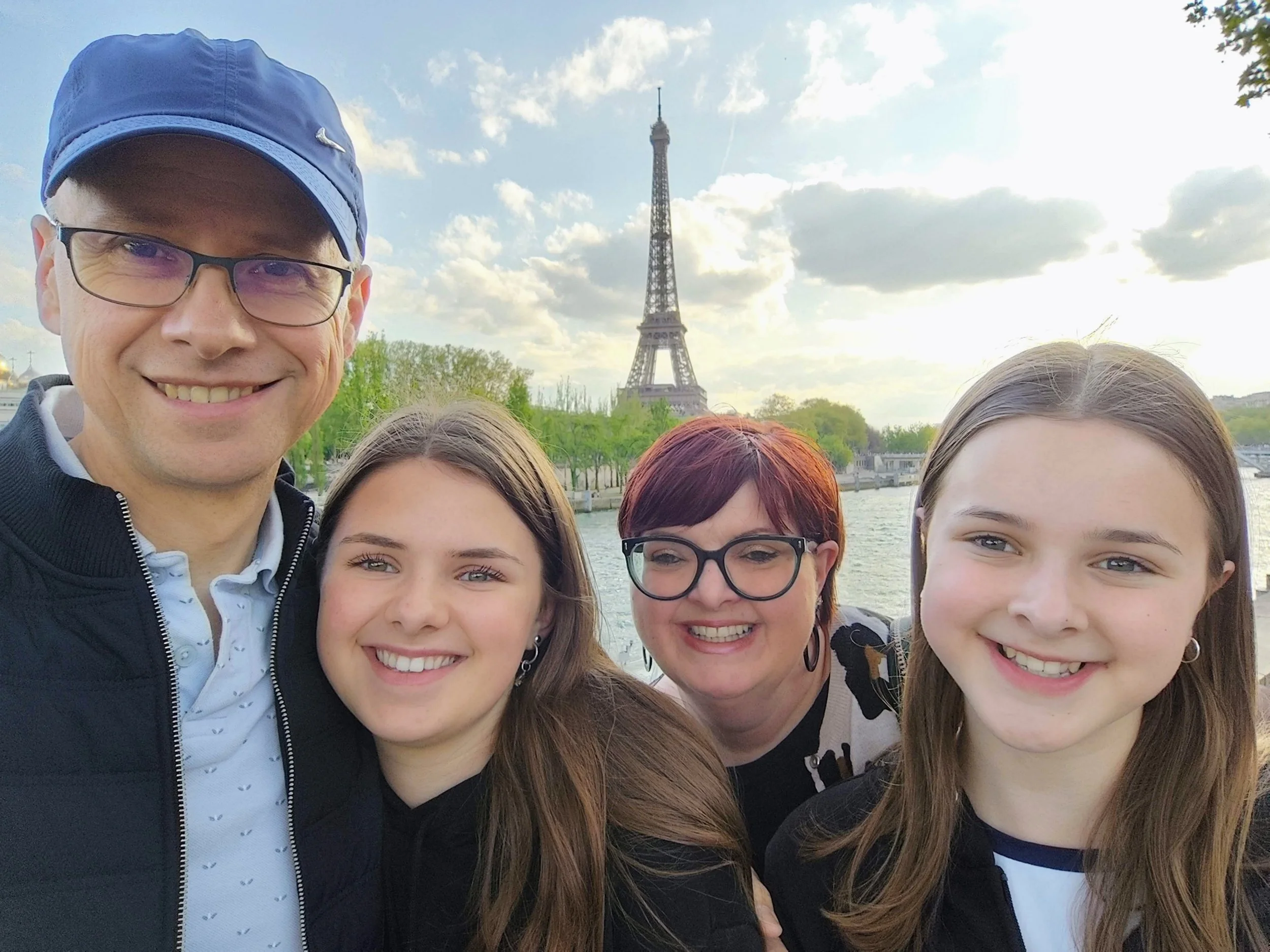
Rachel’s Journey
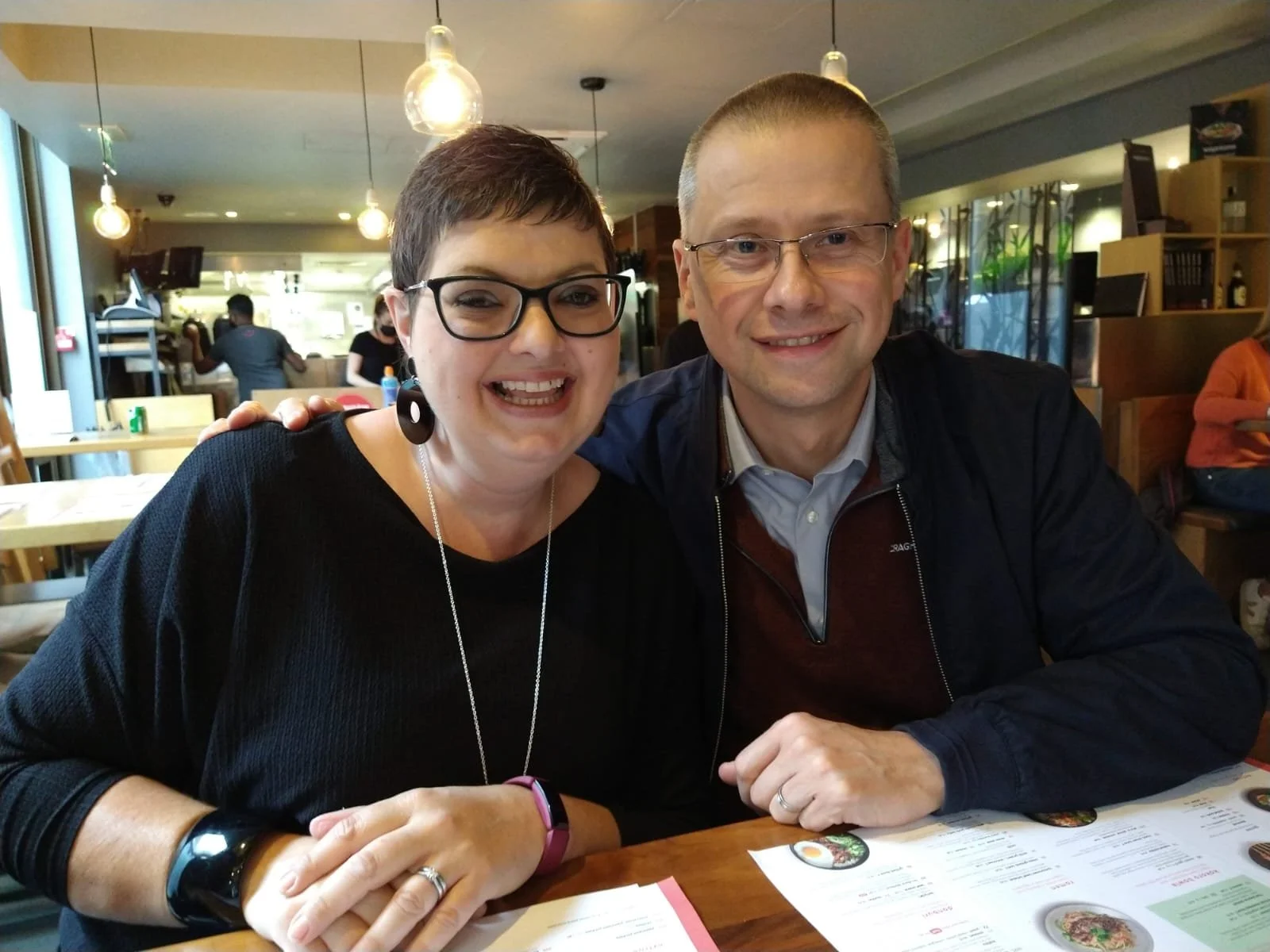
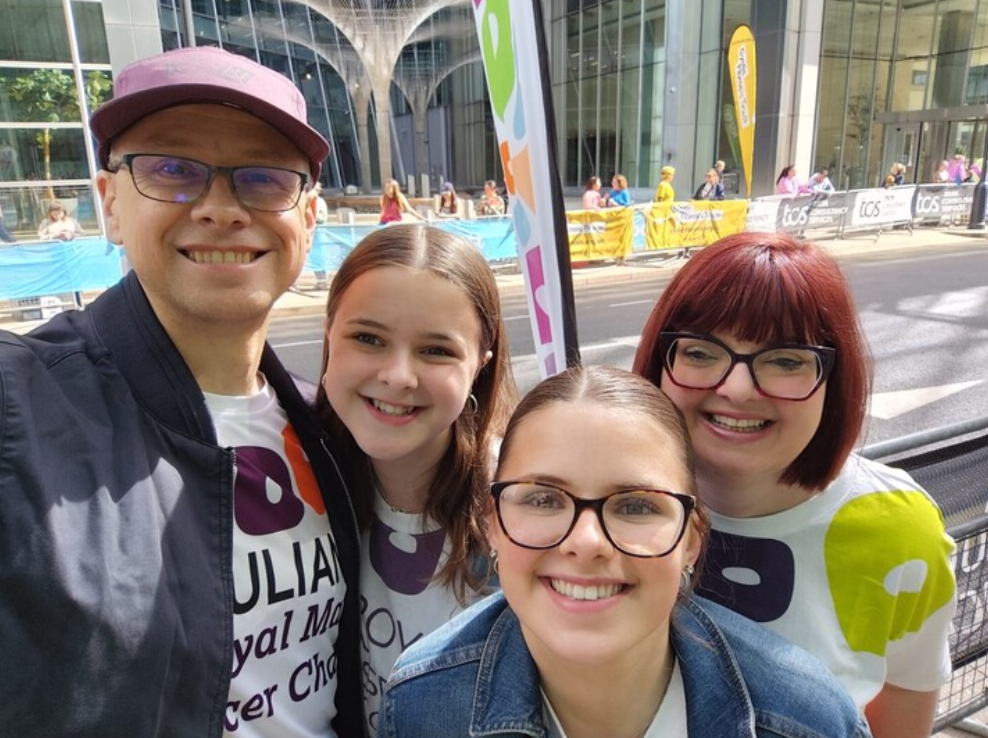
Rachel, mum to two daughters, was diagnosed with stage 4 cervical cancer in 2020, age 45. She has been treated at The Royal Marsden under Dr Alexandra Taylor, undergoing chemotherapy, radiotherapy and brachytherapy. Rachel, who lives in Kingston, is now four years in remission. Her husband Julian ran the London Marathon last April (2025), raising over £2,000 for The Royal Marsden Cancer Charity as a way of saying thank you for everything the hospital has done for their family. His mum was also treated at The Royal Marsden over 30 years ago for ovarian cancer.
Getting a cervical cancer diagnosis during the COVID pandemic
It was around October – November 2020. The first lockdown had happened, but London was about to go into the second lockdown.
For a long time, I’d been having contraceptive injections – every three months at the GP surgery. When COVID hit, I couldn’t go in for these injections anymore. Instead, they put me on a different kind of contraceptive pill and asked me to let them know if I was having any issues.
Over the course of the next 12 months, I started bleeding irregularly. I never had anything like this on the injections – I put it down to the fact I was on different medication. A few months later, the irregular bleeding was still happening, so I told my GP about it. COVID rules had changed, and I could start having the injections again. But the bleeding continued. I was turning 45, so I thought it might just be down to age, hormones or even the start of menopause. I didn't have any other symptoms but kept track of the bleeding in a diary.
A month before I was due to have my next regular smear test, I rung the doctors to tell them it was still happening. They asked me to come in straight away. A specialist doctor examined me. She then put me on a quick referral path, and everything moved very fast from that point. I had a biopsy and was referred to my local hospital for scans including an internal and external ultrasound and an MRI.
Within about a week, I was asked to come back for the results and to see one of the gynae consultants with the nurse. At that time, the COVID hospital rules said that I couldn't take anybody with me. This is when I was told that I had cervical cancer. It was such a shock! The first thing I said to them was: ‘How am I going to tell my kids?’ They were eight and ten years old at the time.
I had more scans which showed that actually it wasn't just stage one. The cancer had gone into the surrounding tissue, so it was at least stage two. This is when I was referred to The Royal Marsden, as they knew this would be the best place for me.
Coming to The Royal Marsden – stage 4 cervical cancer
At The Royal Marsden, I had more scans and about two weeks later, they asked me to come back in and to bring someone with me. Julian and I went to the hospital together. This is when they told us that the cancer was actually stage four, because it had spread further into my lymph node system. Thankfully it hadn’t spread to any other internal organs.
This news felt catastrophic because stage four cervical cancer is very different to stage one. I've always been really good at having my smear tests so this all felt like such a massive shock. The hardest thing is waiting for the answers. So many people I’ve spoken to since my diagnosis, who have been through similar situations – they all say the same.
The Royal Marsden have always been brilliant. I was put under the care of Dr Alexandra Taylor who immediately reassured me by saying she had a plan. Because I was fairly young and healthy, she hoped that they could get rid of the cancer – but it would be quite an intense process.
Surgery was out of the question because it had spread, so I started with chemotherapy.
In between the first and second round of chemo, my hair started to fall out. It wasn't as bad as I thought, and I had forward-planned that this might happen, so I had already spoken to my hairdresser. But then we went into lockdown again! I phoned my hairdresser and asked what I should do. She told me to take Julian’s clippers and what grade to put them on to shave my head. Julian shaved all my hair – and it was actually a really intimate, loving moment that we shared. I felt a lot better after this – it made me feel like I’d taken back some control.
The chemo nurses were all amazing and knew exactly what do, even when there were some challenges with my second and third round of chemo. I've learnt along the way during this experience that cancer treatment is very fluid and that The Royal Marsden teams are all amazing. Before you're a cancer patient, you just don't realise how it all works. It's not just about one drug. It's about a treatment plan which is personalised for each and every individual.
After the third round of chemo, I had some scans so they could see how I was responding to treatment. These showed that the original treatment had shrunk the tumour, and the cancer had gone from some of the lymph node areas. Such a positive update! The first bit of good news in a long time.
My treatment then continued with chemoradiation and brachytherapy.
Getting the all-clear
I went to see one of the registrars in Dr Taylor's team in 2021 who had been so lovely and supportive to me. I remember her asking me how I was and then telling me the news that my latest set of results were showing no evidence of disease – I was in remission. I cried and she cried! It was such amazing news; I was in total disbelief. You feel like this massive weight, that you didn't even know you were carrying around, has been lifted off your shoulders.
There is a saying when you’ve been in hospital so regularly and had so much treatment that you’re a ‘professional patient.’ Having had such a long time with lists of appointments and The Royal Marsden being my second home, it was all a bit odd when everything was over and finished. Before my cancer diagnosis, I was running my own childcare business. I wasn't well enough to start work again straight after my treatment finished, but I did go back for a few days a week in September.
After getting the all-clear, you think you'd be really elated to go back to normal life. But and this is hard to explain, it’s not that easy returning to your pre-cancer life. By this point the COVID lockdowns had all lifted too, so it felt like an end of an era – life for everyone going back to normal.
Having cancer definitely does change your mindset a bit. It makes you focus on what's really important to you and value things that you've taken for granted before. I suddenly realised what amazing friends and neighbours I have! My friends couldn’t come in the house during lockdown so they would sit on the drive in deckchairs and have a cup of tea whilst I had my front door open! My next-door neighbour taught my children to cook Sri Lankan snacks on a barbecue in her garden. Everyone was just so brilliant, supporting us all as a family.
I always had a plan that when our youngest daughter went to secondary school, I'd rethink what I was going to do for work. Cancer and COVID moved these timelines forward a bit and I decided I wanted to go back to working in a secondary school to try and make a bit of a difference. I think cancer got me to do that a bit quicker than I would have done. In a way, I’m thankful for that because I’m now really enjoying my job.
Life after cancer
Since getting the all-clear, we’ve taken the children abroad on holiday and done lots of nice things, but it’s the little things that you pay more attention to. All those little interactions you have with people – some which couldn’t happen during cancer and COVID, you suddenly realise how much you missed these.
It’s lovely to see our children growing up. I look back on everything and wonder how they dealt with it really. My older daughter, who was 10 at the time, was very interested in everything and always asked lots of questions. Whereas my younger daughter found it hard to get her head around it all. I remember walking her to school one day and just before we got there, she turned around and looked at me and she said, ‘Mum are you going to die?’ And I just said, ‘Not today, no.’
I feel so lucky to be alive and to have Julian, my husband, this wonderful man in my life who is my rock, and to have my amazing children.
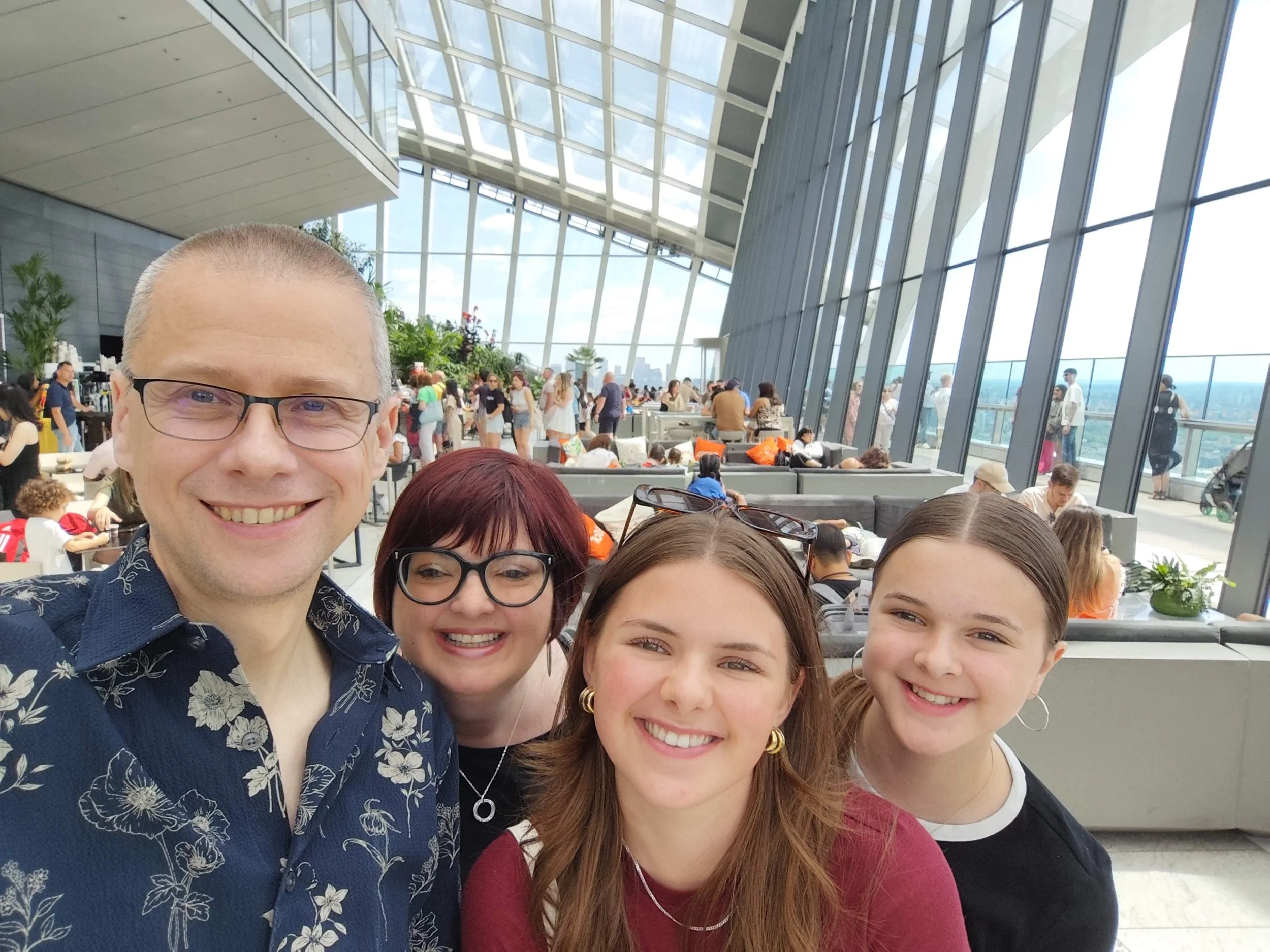
Cervical cancer awareness week - the importance of open conversations about women’s health
My daughters’ school has been brilliant; they know what I've been through. Ahead of Cervical Cancer Awareness Week at school, they had already warned the girls about what would be discussed, in case it would be too upsetting for them. They chose to stay in the sessions.
We've been very open with them from day one, and we still talk about it a lot. Although we've got a bit of a joke that I don't tell my oldest daughter when I'm going to hospital for my yearly scans as she gets worse scanxiety than me! So I tell her once I’ve got the results and they’ve come back all clear.
These things happen in life. And they're really hard to deal with. But if you've got that right support network, actually some positives can come out of it. My girls are resilient, independent and they're good at talking about things. My oldest daughter has had her HPV vaccine at school, and her sister will be doing the same. We’ve spoken about how it's really important as women, if things change or don't feel right with your body, you must go and see a doctor.
This is one of the things I talk about with my amazing nurse in The Royal Marsden gynae team, Andreia Fernandes. How people are often embarrassed to talk about gynae issues or their genitalia. There are gynae cancer support groups, but I think they’re not as well attended as those for breast cancer.
I’m an RE teacher, but I've also taught a lot of PSHE, educating young people about sex and their bodies. I think we, as a society, have got better at talking more openly about things like this, but we're still not great. We can be a bit shy and embarrassed. It's really interesting when people find out that I’ve had cancer, they assume it's breast cancer.
Another thing I’ve discussed with my nurse Andreia is the topic of partners, when you’re going through a gynae cancer diagnosis and treatment. I am very lucky to have a very understanding husband. This can be a very difficult and challenging part of your marriage. I think it's really important for men to understand what's going on as well so that they can process it too and be mindful and thoughtful – Julian has been such a lovely husband to me who has been with me every step of the way, but I know not all relationships are quite like that.
Thank goodness for the HPV vaccine because I'm hoping it will protect my children. I’m so glad that teenage girls are having conversations about things like this now, that never happened years ago when I was growing up.
What The Royal Marsden means to us
The Royal Marsden means home. It means hope. The Royal Marsden gave us strength and hope that the worst news doesn't necessarily mean the end. They saved my life.
In August, hopefully, I will be five years in remission. Throughout that whole time, I've been given reassurance all the way from the medical team. I’ve never felt alone.
Going to The Royal Marsden doesn’t feel like going to any other hospital. You walk in and the atmosphere is so lovely, it’s so calm – even though what you’re going there for is really scary. The people there are all just amazing – we’re so thankful to everyone for what they’ve done for us. I feel so lucky to have access to such specialist treatment and care.