Hannah’s STORY
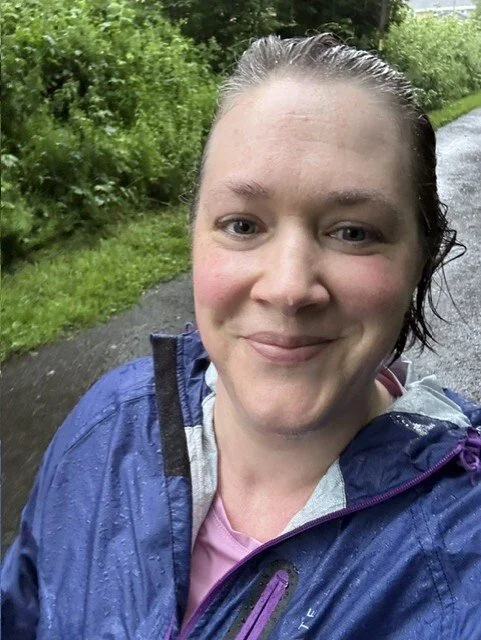
I’m Hannah aged 43 and AuDHD (autistic and ADHD), I was diagnosed with endometrial cancer aged 41, I’m mum/carer to two teenagers.
I’d had issues with my periods/womb for over a decade. I’d had investigations in 2018 and received a ‘diagnosis’ of unexplained vaginal bleeding. I would experience flash flooding and pain often. I couldn’t leave the house without wearing pads, just in case.
Gradually things began to change. My symptoms in some ways became easier to manage, less heavy bleeding which became light bleeds occasionally. My discharge had also changed. I contacted my GP, I had a telephone consultation and was left feeling that it was nothing to be concerned about. I didn’t feel entirely reassured though. My mum had had womb cancer and so I was aware of some of the signs (which I had also shared with my GP), I did two more online consultations/phone appointments over the following year or so about the same issue. Repeating my concerns about some of the symptoms being those of womb cancer. When I asked if it could be perimenopause, then I was referred to gynecology.
I went for a scan. Which had shown something of concern as I heard the two sonographers talking. I went home and checked the NHS website and knew that it could mean several things. One of those was cancer, and that it was impossible for them to know without a biopsy. Due to this I assumed that I would be called in soon for that.
I didn’t hear anything for weeks, then months. I called the doctors to be told the referral had been sent. I raised my concerns and was told if the GP had any concerns they would have flagged it, so not to worry. I tried to raise it at another appointment, with another GP and was just told womb thickness varies at different parts of our cycles. I wasn’t, by this time, having periods at all, just occasional spotting and bloody discharge, I would have pain and a heavy feeling in my womb too. I tried calling gynecology, but I was told nothing could be done until I reached the top of the list.
I finally got an appointment 10 months after the referral. At this appointment I was told the issues I’d had for over a decade was adenomyosis, a condition I hadn’t even heard of. But that I also needed to have a hysteroscopy and biopsy, which is a standard procedure with this condition. I had the choice of having this under general anesthetic or awake. The wait for GA was much longer and so I opted to be awake for it.
I attended my appointment alone. The team were incredibly kind and calming. At my previous investigations I’d had an awful experience, and this was much better. It was painful, but I had options to help manage that should I need them. After the hysteroscopy and biopsy were complete, the consultant came to speak with me, to warn me that she expected the results to show abnormal cells, and that I would likely need a hysterectomy. I think I laughed. Not because it was funny, but because it was a relief in a strange way, for someone to finally recognize there was an issue. I explained I’d been worried about this for some time but my GP kept saying there were no concerns. Though once I left I went immediately to the toilets and cried. I had to drive myself home, my eldest son’s tutor was due (as he didn’t attend school), and I had to keep going. I’m grateful that I was attending a baby shower the following day, I was still in pain, but it was good to be distracted and stop me worrying.
I’d been told that the results had been marked urgent and that I would hear within two weeks. I called up after two and a half weeks to be told there was a delay due to a back log in the labs. Three weeks and 6 days later, I received a text message with an appointment the following day. I knew then that it was cancer. I was in the middle of a zoom meeting.
I was told it was, as far as they could tell, Stage 1 endometrial cancer. But that would be confirmed after the treatment, which was to be a total hysterectomy and bilateral salpingo oopherectomy.
That was a Friday. Telling my children was difficult. But it helped that my Mum had had a similar cancer and was okay. I’d used the four week wait to prepare just in case. As a single parent/carer it was tricky. A friend would come and stay with my children whilst I was in hospital, my youngest’s school offered to help pick up and drop them off whilst I was unable to drive.
There were just five days between learning I had cancer and my hysterectomy, in many ways this was a relief, less time to worry. I also wanted the cancer gone. I was incredibly nervous. Going into surgery as a single parent felt like such a huge pressure, so many what ifs bouncing around my mind.
The surgery went okay. To keep my ‘bulky uterus’ whole to reduce any risk of accidental spread, they had to change from robotic surgery to open abdominal surgery. I’d lost more blood than they’d expected and it had been more awkward than anticipated. I was in surgery twice as long as planned. But I was okay.
I heard the good news around 11 weeks later, that it was stage 1, grade 1 cancer and they’d removed it all. It was a huge relief. I was slowly recovering and hearing that news helped with that.
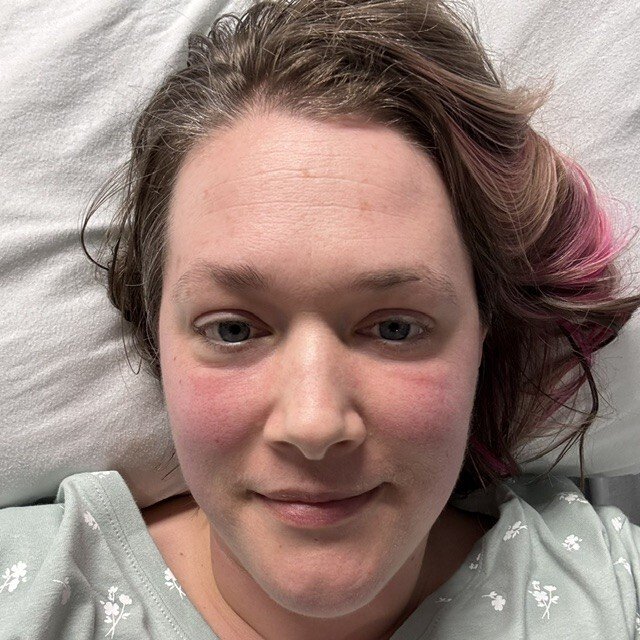
I’m 17 months post-surgery now, I am running again and working out. Though surgical menopause is an ongoing learning curve, I am taking a low dose of HRT to help.
I wish I’d known, or had the confidence to ask for appropriate referrals from the beginning. The change from my normal, not having regular periods and the bloody discharge, being red flags, especially in someone premenopausal. I want people to know to get checked if their normal changes.
I was recently at a GP appointment, discussing issues around surgical menopause and my ADHD (it makes it significantly more challenging to manage the ADHD). And during the various things discussed the GP told me that I wasn’t at risk of a cancer reoccurrence, this simply isn’t true. Even though my womb is gone, I can have a reoccurrence. This does leave me feeling vulnerable, which is why I am keen to raise awareness of the signs and symptoms of womb cancer, especially in pre-menopausal females. It does happen. The GP’s cannot know everything, and so we need to be aware of what to look out for and what to do.
I would also like to share that it can often be seen as a ‘good’ cancer to get, because it can be removed. And though I can understand and appreciate that is true, it can feel invalidating for people to say it. We can be left feeling that our experiences are excluded from cancer spaces, and that we don’t quite fit anywhere. So though it may well be easier to treat in some regards, the treatment, the cure, still has a lasting impact. My energy is less; my capacity is reduced. My ADHD symptoms are much more challenging day to day. I’m not the person I was, yet the expectations of me remain the same.
I feel incredibly grateful that the cancer was caught, and treated. Especially with the time it took for me to be seen. I am glad the consultant warned me at my hysteroscopy appointment, even though it was hard at that moment, it gave me time to prepare. I felt lucky for all those who helped at the time and afterwards.