SHERYL’S STORY, SHARED BY ASHLEY
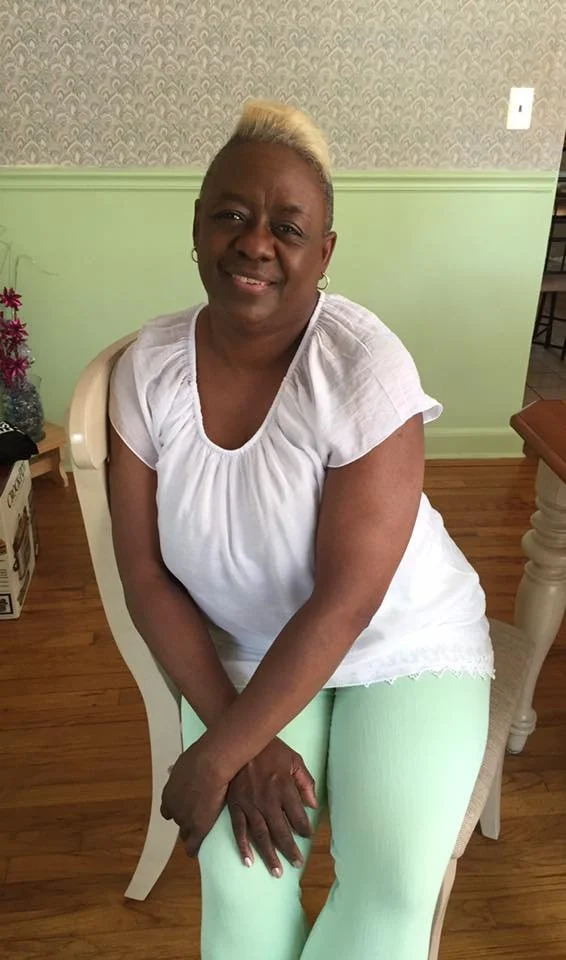
Hello, my name is Ashley! I am 36 years old, and I live in the United States of America. I would like to tell you about my mommy, Elizabeth Sheryl McDowell. But please, do not call her Elizabeth, she prefers to be called by her middle name, Sheryl.
My mom is a feisty, independent, “don’t take crap from anybody” kind of woman. She overcame a difficult upbringing to fulfill her number one dream in life: to be a mother.
At a very young age, my mom was told that she probably would not be able to have children of her own. But to my mom, a “no” was an insult. She always found a way to turn a no into a yes. So, she relied on her faith and her trust in God. And suddenly, she was blessed with four children by the age of 30. First came my oldest brother, Troy, who is autistic. Then, ten years later, came my brothers Bruce and Carl and me, triplets! To my mom, this was nothing short of a miracle, and she would always credit her heavenly father for making it possible.
For the rest of her life, my mom paid that blessing forward. She became a source of encouragement and support for women struggling with infertility and miscarriage, often stepping into their lives as a big sister, a mother figure, or simply someone who understood what it meant to hold onto hope when the odds seemed impossible.
Two years ago, my mom shifted her focus to another fight.
In late 2024, my mom was diagnosed with Stage 1B, Grade 3 endometrial cancer. It was discovered through a biopsy after her pap smear came back abnormal, the first abnormal pap smear she had ever had in all my 36 years of life. Yes, pap smears do not detect uterine cancer, but my mom had faithfully gone to her annual gynecological appointments throughout her life. In that faithfulness, something in her body raised a red flag in one area that ultimately led doctors to discover a problem somewhere else.
My mom had undergone some type of freezing procedure on her uterus a couple of decades ago, but ultimately, she underwent a hysterectomy. Her doctors believed they had successfully removed all of the cancer. Radiation was recommended, but she was given up to a year to begin treatment. My mom chose to wait, giving her body time to heal from the surgery before taking the next step.
As we entered the holiday season, I was grateful beyond words that our family of six could still be together, healthy, happy, and simply enjoying one another. At the time, my brother Carl was preparing to get married in the summer of 2025. We had no idea that this would be our last holiday season together before our lives changed forever.
By May 2025, the cancer had returned as metastatic and spread to multiple areas of her body. My mom fought as hard as she could to stay here with us, but ultimately, she never had the opportunity to begin chemotherapy, as radiation was no longer an option. She spent nearly two months in the hospital, fighting through one challenge after another. Eventually, I brought her home under hospice care. Just a week and a half later, our heavenly father brought his daughter home on September 23, 2025, on my 36th birthday. There are no words to fully describe what it feels like to lose your mother on the very day you were born. The day that once represented the beginning of my life became the day I had to learn how to live without her.
During those months of anticipatory grief and eventually into the journey of grieving her loss, I immersed myself in research about uterine cancer. I quickly realized how much I did not know. I did not even know that uterine cancer was one of the five major gynecologic cancers, or that it is the most common. Honestly, the cancers I was most familiar with were the ones women are routinely screened for, cervical cancer through pap smears and breast cancer through mammograms. As I began learning more, I discovered that black women are approximately two to three times more likely to die from endometrial cancer than white women, even when they receive similar diagnoses and treatment. I also learned that my mom’s cancer being grade 3, even though it was diagnosed at an early stage, meant that it was much more aggressive and had a greater likelihood of spreading. Perhaps most importantly, I learned about one of the most significant warning signs of endometrial cancer: postmenopausal bleeding. Even something as seemingly minor as spotting is dismissed as “normal.” The hardest part is that I learned most of this after my mom died.
I also began learning more about my own womb health, especially as I navigated my own battle with fibroids. I found new doctors who would listen, take my concerns seriously, and explore treatment options beyond birth control or a hysterectomy to preserve my fertility and continue pursuing my own dream of motherhood like my mom.
Advocacy has always been something I have been passionate about. If I can advocate for my mom today, I want to use my voice to address the things I wish we had known and experienced differently. I wish my mom had a required connection to a specialized oncology team at the time of her diagnosis, rather than solely having her care coordinated primarily through her gynecologist and the surgeon who performed her hysterectomy. I also wish I had known more about uterine health before her cancer journey. I believe doctors should provide more education about gynecological health and conditions throughout every stage of a woman’s life. I also believe there needs to be greater funding for research. It is heartbreaking to know that women have been suffering in silence and are finally sounding the alarm about these issues, only to discover how little funding, research, and resources exists to address them. I want women to know that even the smallest amount of unexplained or abnormal vaginal bleeding needs to be investigated. I want doctors to care about a woman’s womb beyond her ability or desire to have children. And I believe women should have greater access to routine imaging and transvaginal ultrasounds covered by health insurance, rather than having to beg for answers only after pain becomes impossible to ignore.
These are not just wishes. They are changes I believe women deserve and I will continue to use my voice to advocate for.
My mom always wanted people to know what God had brought her through and how her experiences could help others. Since she is no longer here on earth to tell that story herself, I will gladly be her voice. Mommy, look at you! Your life is still changing the lives of so many women, not only across the United States, but now, through these words, reaching women in the United Kingdom.